image
                                                Audio-Restoration Services

image

        Audio Restoration and Cassette Repair Services

Audio restoration and transfer of LP's, Cassette Tapes, Reel to Reel tapes, 45's, 78's and wire recordings to CD and cassette repairs for both standard and microcassette tapes.


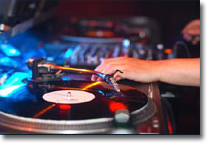
  • Audio restoration and transfer of your favorite LP's, 45"s and 78's to CD.
     
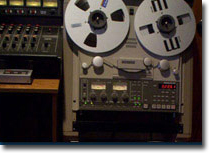
  • Audio restoration and transfer of reel to reel, cassette, 8 track and wire recordings to CD.
     
  • Cassette Repair for both standard and microcassette tapes.
     
  • Tape Baking services.
     
  • Combining your favorites songs from different sources into a single CD.
     
  • Special projects that don't fit the standard requests. 
     
  • NO JOB TOO SMALL  

  • Some of Our Clients


Restorer for Nostalgia Ventures
(Old Time Radio Shows)


Transfer and Restoration of Tape Archives


 University of North Carolina


Restorer for Cord International Records


Click here
to read testimonial


Click here for more testimonials


Audio Restoration audio restoration

Audio restoration and sound restoration services... we specialize in the restoration and transfer of old
records and tapes to CD. Those old tapes deteriorate with age, so don't let them get to the point that
they are no longer playable. Let us restore those keepsakes and transfer it to a CD before it's too late.

How can we help?  Do you have a collection of old 78's or LP's that you hesitate to play on your
old turntable?. Would you like to hear them on your car stereo as well as have those pops, clicks and
scratches removed? We can do just that with our sound restoration services. Do you have on old tape
of a family member you would like to pass on to your children? Let us transfer it to CD and make copies
for your entire family. There's no job to small or to large!
Free Estimates, Free Samples...

lp to cdlp to cd

Let us restore and transfer your treasured records to CD. Why CD's? CD's do not wear with repeated play, do not warp or crack, and have a shelf life of decades. LP to CD information and pricing.

Tape recordings

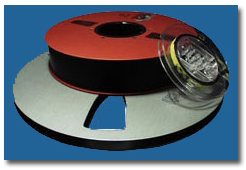
We can restore and transfer your treasured recordings to CD, including wire recordings. Why CD's? CD's do not wear with repeated play, do not warp or crack, and have a shelf life of decades. Audio Tapes information and pricing.

CassetteCassette Repair              

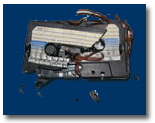
If your cassette or microcassette tape needs repair, splicing, re-attaching the leader tape to the spindle or replacing the shell, Audio Restorations can make the repair for you at a reasonable price.  Cassette Repair information and pricing.

Tape Baking  Bake

A lot of tape manufactured in the mid-to-late 1970's is starting to come out of storage now for re-mixing and re-issue, and engineers are finding that it won't play. The surface of the tape has become gummy and it sticks to the heads and fixed guides of the tape transport, squealing, jerking, and, in extreme cases, slowing down or stopping the tape transport. This problem has cropped up on all brands of tape, but is nearly always fixable, at least temporarily by baking the tape.
Tape baking info and pricing
.

Free Samples of Your Audio Restoration Project

Send us a sample and we will be happy to provide a short clip of our sound restoration service. This
can even be done by email. There's no charge for this service.

We also provide free estimates based on the description of your project. It takes just a few minutes to
fill out our
Estimate Form and there is no obligation.


Audo Restoration Testimonials                          Audio Restoration Sound Restoration Services

Hello Mark!

Package arrived this morning and I listened to the CD on my favorite reference boom box and it sounded
incredible. You did an exquisite job of removing surface/tape noise. It's not every day that one listens to
a recording for the first time that one made in 1968 - so I kept my mind open to the experience.

Listening to the recording through my studio monitors only intensified my awareness and appreciation
of what a beautiful job you did cleaning up the recording. It's mind blowing in a way - in that it is as if
someone took a time machine and traveled back 37 years and recorded the event with a professional
DAT machine.

I will be printing records to sell to my LP-obsessed fan base in Japan. I will definitely be mentioning Audio Restorations along with your web site in the liner notes.

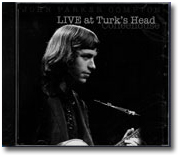
John Parker Compton (Columbia Recording Artist, VMC Records)

Audio Restoration Sound Restoration Services


More Audio Restoration Testimonials...


What is Audio Restoration

Audio restoration is a generalized term for the process of removing imperfections (such as hiss, crackle, noise, and buzz) from sound recordings. Audio restoration can be performed directly on the recording medium (for example, washing a record with a cleansing solution), or on a digital representation of the recording using a computer (such as a AIFF or WAV file). Record restoration is a particular form of audio restoration that seeks to repair the sound of damaged records.

Modern audio restoration techniques are usually performed by digitizing an audio source from analog media, such as lacquer recordings, optical sources and magnetic tape. Once in the digital realm, recordings can be restored and cleaned up using digital audio workstations (DAWs). DAWs can perform various automated techniques to remove anomalies using algorithms to accomplish broadband de-noising, de-crackle and de-hiss tasks. Often audio engineers and sound editors use DAWs to manually remove "pops and ticks" from recordings. DAWs are capable of removing the smallest of anomalies without leaving artifacts and other evidence of their removal. Audio restoration is often a time consuming process that requires skilled audio engineers with specific experience in music and film recording techniques.


Overview

The majority of audio restoration done today is done for music sound recordings and soundtracks for motion picture and television programs. The demand for restored audio has been fueled by new media consumer technologies such as CD and DVD. Modern audio reproduction systems require that sound sources be in the best condition possible to enhance the listening experience. Media content owners have come to recognize the importance of having clean sound on their products to enhance the commercial value of their media assets.

The byproduct of these restoration efforts is that many audio sources are brought into the digital world and preserved for future use. An unfortunate fact is that most of the sound recordings and motion picture soundtracks created over the past century have been lost due to improper storage and neglect.

Enhancements are often done to motion picture soundtracks. For example taking a mono or stereo soundtrack and re-mixing it to a modern 5.1 surround soundtrack. When sources from original discrete audio "stems" containing dialog, music and sound effects are used and properly restored, the enhancements can be significant and highly effective.

Recent developments

Two researchers at Lawrence Berkeley National Laboratory, Drs. Vitaliy Fadeyev and Carl Haber have been experimenting with an audio restoration method which involves taking a very high definition digital photographic image of the vintage recording medium. They use a precision optical metrology system (designed to scan silicon detectors) to form an image of the groove on a 78 rpm record. After processing the digital file, they have an audio stream that represents the variations in the groove walls, allowing them to 'play' the record virtually without using a phonograph stylus. 2D images can be made more quickly and have proved worthy of further investigation on 78 rpm discs cut laterally. A 3D method is possible, though it takes much longer for the photographic survey of the recording and it requires much more storage space for the larger digital file. 3D methods are required for non-flat media such as "hill-and-dale" recordings (an early vertical cutting method by Pathé), Edison cylinders and Dictabelt rolls. 3D imaging is required for stereo phonograph records in order to capture the full detail of both inner and outer groove walls.[1][2][3][4]

In the summer of 2007, the U.S. Library of Congress moved their audio, video and film restoration group to Culpeper, Virginia where the newly completed National Audio-Visual Conservation Center Packard Campus is sited.

Gene DeAnna heads the Recorded Sound Section. With 3 million sound recordings and many more film and video works that include synchronized sound in the archive, the mission of the Sound Section is twofold: preserve the treasure of vintage sound recordings and increase public accessibility to the collection.

One of the ways that access can be increased is through the diligent digitization of analog media. The Library has expressed interest in the Fadeyev/Haber 2D imaging method for quick digital archival of their vast collection of vinyl and shellac phonograph records. Audio restoration tasks will take place in parallel with the digitization effort. A massive multipetabyte storage array is nearing completion; it will hold the large digital audio and moving image files.

Subjective issues

Audio restoration is a subjective process, and there are many strategies or perspectives that the audio engineer or sound editor can employ. The archival perspective says that audio restoration should restore the recording to its original condition, while the commercial perspective says that the recording should be both restored and enhanced to appeal most immediately with modern audiences.


Audio Restoration Sound Restoration Services
add keywords here

Audio-Restorations.com - Audio restoration and sound restoration services...

| Pricing | Cassette Repair | Tape Baking | LP 2 CD | Tapes to CD| Video to DVD | Related Links |


Audio Restoration Sound Restoration Services
image